Stamp Duty on Property Purchase: State-Wise Guide 2026
Stamp duty is a tax on property transfer documents (registration). It varies by state, property type, and buyer profile. A property valued at Rs 50 lakh can cost Rs 2-5.5 lakh in stamp duty depending on state and buyer type. Understanding state-wise rates helps avoid overpayment or underpayment penalties.
This guide covers current stamp duty rates by major state, how rates are calculated, gender-based concessions, and exemptions.
Stamp Duty Rates by State (2026)
Residential Properties
Key trends:
- Southern states (Tamil Nadu, Telangana) have higher rates (6-11%)
- Northern states (Delhi, Haryana, Punjab) have lower rates (4-5%)
- Women buyers get 1-3% concession in most states
- Rural properties often have 0.5-1% lower rates
Commercial Properties
General rule: Commercial stamp duty is HIGHER than residential (typically 7-9% across states).
Example: A Rs 50 lakh commercial property:
- Maharashtra residential: 5% = Rs 2.5 lakh
- Maharashtra commercial: 7-8% = Rs 3.5-4 lakh
How Stamp Duty Is Calculated
Formula: Stamp duty = Property value × Applicable rate % (by state and property type)
Example (Maharashtra, residential, non-woman buyer):
- Property value: Rs 50 lakh
- Rate: 5%
- Stamp duty: Rs 50 lakh × 5% = Rs 2.5 lakh
Example (Telangana, residential, woman buyer):
- Property value: Rs 50 lakh
- Rate: 4% - 1% (woman concession) = 3%
- Stamp duty: Rs 50 lakh × 3% = Rs 1.5 lakh
- Savings: Rs 1 lakh due to gender concession
Gender-Based Concessions
Applicable when property is in name of woman (single, married, widow):
Strategy for married couples: If purchasing as joint owners, registering in woman's name first gives stamp duty concession.
Additional Registration Charges
Stamp duty alone is not the only cost. Registration fee is separate and varies by state:
Total tax cost: Stamp duty + registration fee
- Maharashtra: 5% + 1.5% = 6.5% total
- Delhi: 4% (stamp + registration combined)
- Tamil Nadu: 11% + 1% = 12% total (highest in country)
Exemptions from Stamp Duty
Partial or full exemptions (state-dependent):
- Affordable housing: Properties below Rs 45 lakh value (some states offer 0% or reduced rates)
- First-time home buyers: Some states (Rajasthan, Gujarat) offer 1-2% concession
- Agricultural land: Often exempt or lower rate (varies by state)
- Government property transfers: Stamp duty waived
- Charity/donation: Some exemptions (state-specific)
Penalty for Stamp Duty Evasion
Consequences of underpayment:
- Stamp office assessment: Demand notice for shortfall + interest
- Late payment interest: 24% per annum for unpaid stamp duty
- Penalty: Up to 10x the shortfall amount (in some states)
- Document rejection: Deed cannot be registered if stamp duty is insufficient
Example of risk:
- Property value: Rs 50 lakh
- Actual duty owed (Maharashtra, 5%): Rs 2.5 lakh
- You paid: Rs 2 lakh (underpaid by Rs 50,000)
- Stamp office demand: Rs 50,000 + interest 24% + penalty
- Total: Rs 50,000 + Rs 12,000 (interest) + Rs 2,50,000 (penalty) = Rs 3,12,000
Prevention: Always get an accurate calculation from stamp office or sub-registrar BEFORE paying.
How to Pay Stamp Duty
Method 1 (Traditional): In person at stamp office
- Visit sub-registrar office
- Pay demand calculated by officer
- Receive stamp duty receipt
Method 2 (Online): Many states now offer e-stamping
- Maharashtra, Telangana, Karnataka: E-Stamp portal
- Upload property documents
- Pay online
- Receive e-stamp receipt instantly
Method 3 (Through advocate): Hire a property advocate who handles payment and registration
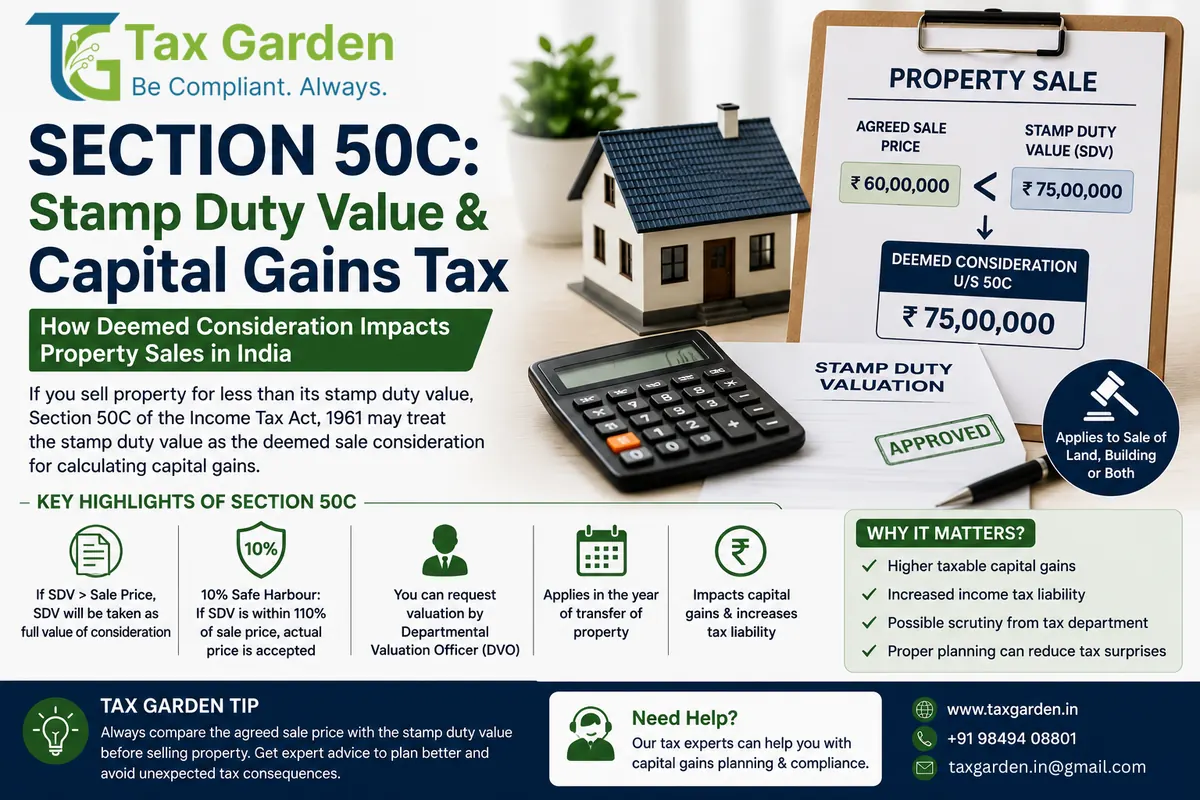
Property Valuation: Stamp Office Vs. Sale Deed
Critical issue: Stamp office often assesses property HIGHER than sale deed value.
Scenario:
- Sale deed value: Rs 50 lakh (registered price)
- Stamp office circle rate: Rs 60 lakh (market guidance value)
- Stamp duty calculated on: Typically the HIGHER amount (Rs 60 lakh)
To reduce duty:
- Check stamp office circle rate before purchase
- Negotiate sale price to match or justify lower value
- Provide evidence of actual negotiated rate to stamp office
- Some states allow value certification from independent surveyor
Key Takeaways for Action
- Know your state rate: Check latest 2026 stamp duty % for your state
- Apply gender concession: If woman buyer, claim 1-3% concession
- Calculate with registration fee: Total cost = stamp duty + registration
- Get official calculation: Ask sub-registrar for exact duty before paying
- Pay in full: Avoid penalties for underpayment
State stamp duty schedules 2026 (each state's Revenue Department); Sub-Registrar guidelines; CBIC notification on real property stamp; Circle rate valuation methods (state-specific).